

Texas Compassionate Use Program: What Conditions Qualify?
If you are wondering whether your medical condition qualifies for medical marijuana in Texas, the Texas Compassionate Use Program (CUP) may be an option. The program allows eligible patients to receive low-THC cannabis when a qualified physician determines that it is appropriate for their medical needs.
Texas has expanded its medical cannabis program over the years, adding conditions such as chronic pain, PTSD, autism, and cancer. Understanding the current qualifying conditions can help you determine whether you may be eligible for a Texas medical marijuana evaluation.
This guide explains the Texas Compassionate Use Program, qualifying medical conditions, eligibility requirements, and how to get started in 2026.
What Is the Texas Compassionate Use Program?
The Texas Compassionate Use Program is the state’s medical cannabis program. It allows qualified physicians to prescribe low-THC cannabis to eligible Texas patients with certain medical conditions.
The program is administered by the Texas Department of Public Safety (DPS), and prescriptions are recorded in the Compassionate Use Registry of Texas, also known as CURT.
Unlike some states, Texas does not issue a traditional medical marijuana card. Patients receive prescriptions through the state registry and obtain their prescribed cannabis from licensed dispensing organizations.
What Medical Conditions Qualify for Medical Marijuana in Texas?
Texas law recognizes several medical conditions for the Compassionate Use Program.
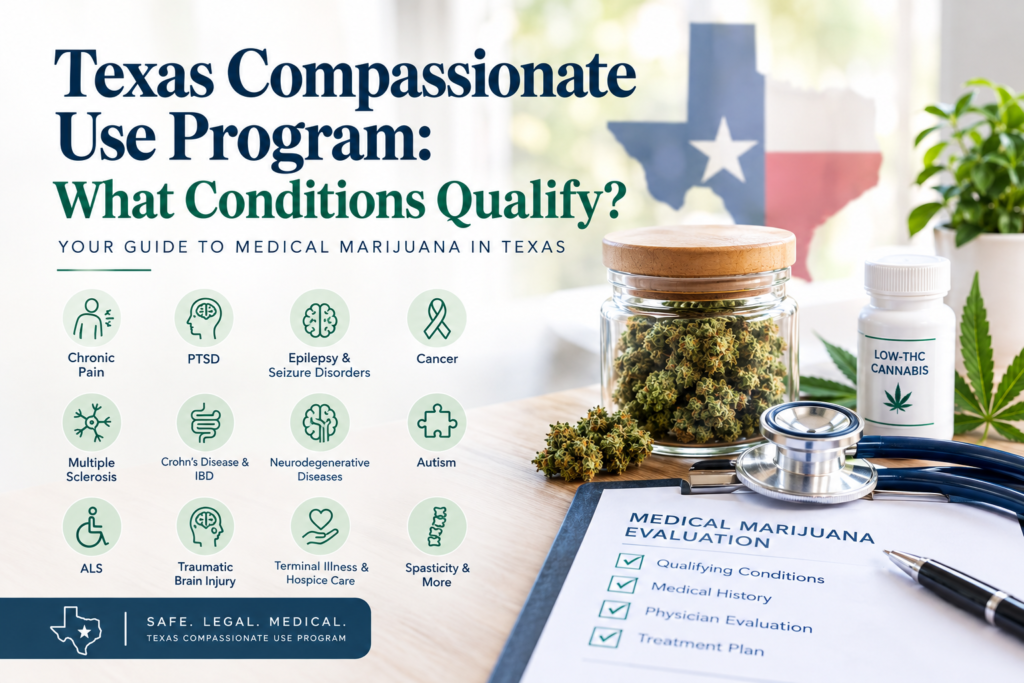
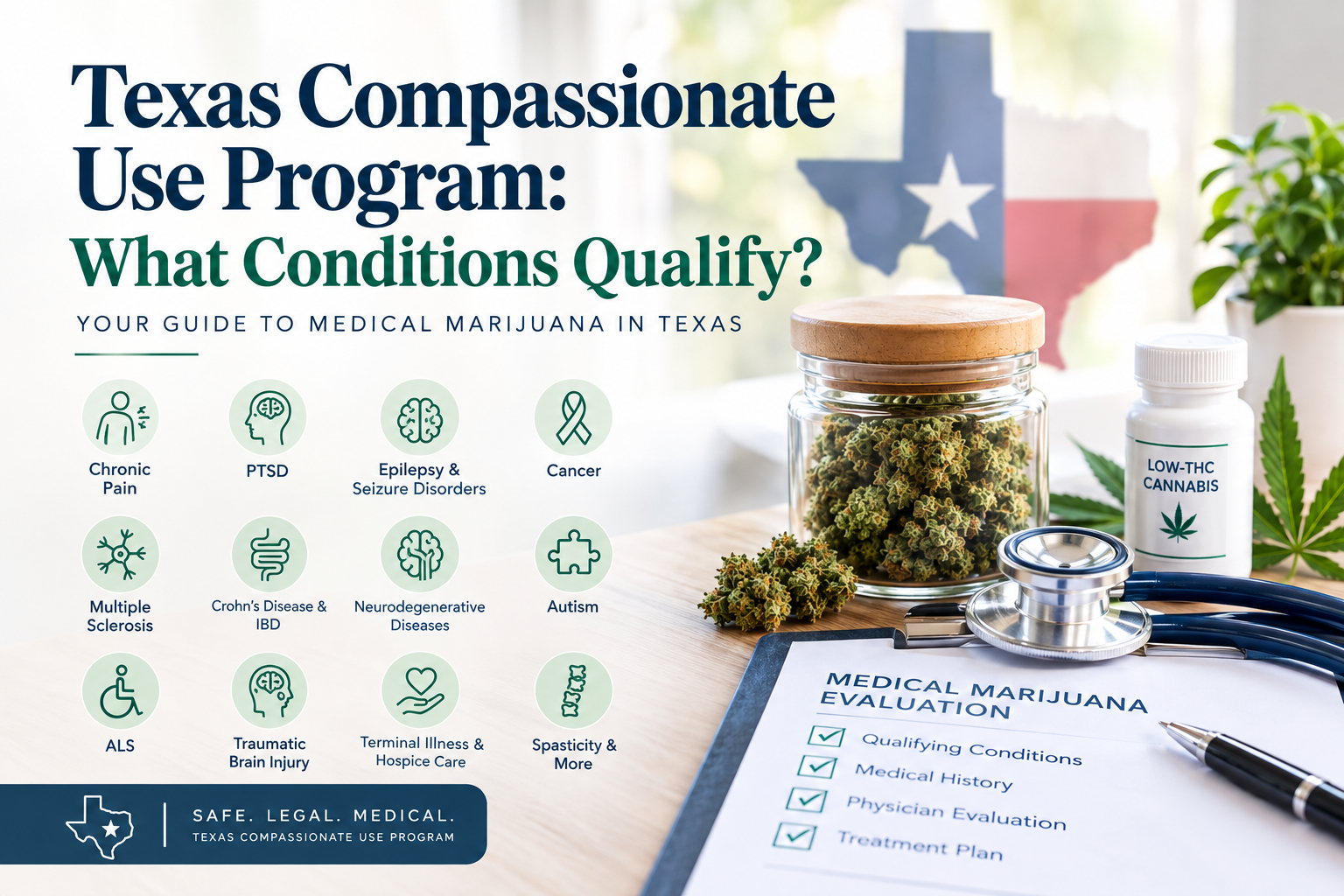
The qualifying conditions include:
Amyotrophic lateral sclerosis (ALS)
Autism
Cancer
Crohn’s disease and other inflammatory bowel diseases
Conditions that cause chronic pain
Epilepsy
Incurable neurodegenerative diseases
Multiple sclerosis
Post-traumatic stress disorder (PTSD)
Seizure disorders
Spasticity
Terminal illness or a condition for which a patient is receiving hospice or palliative care
Traumatic brain injury
Certain additional medical conditions may qualify through approved research programs.
1. Chronic Pain
Chronic pain is one of the qualifying conditions under the Texas Compassionate Use Program.
Texas law defines qualifying chronic pain as severe pain associated with a chronic pathological process that lasts more than 90 days and for which THC is a viable treatment option.
If you experience persistent pain related to an ongoing medical condition, you may qualify for an evaluation. A physician must determine whether low-THC cannabis is appropriate for your circumstances.
Examples of chronic pain that may require evaluation include:
Persistent pain associated with a diagnosed medical condition
Severe pain lasting longer than 90 days
Pain that has not been adequately relieved by previous treatments
Having chronic pain does not automatically guarantee a prescription. A qualified physician must evaluate your condition and determine whether you meet the legal requirements.
2. Post-Traumatic Stress Disorder (PTSD)
PTSD is a qualifying medical condition under the Texas Compassionate Use Program.
Patients with PTSD may experience symptoms such as anxiety, nightmares, sleep difficulties, and distressing memories. A physician can review your diagnosis, medical history, and treatment needs to determine whether low-THC cannabis may be appropriate.
If you have been diagnosed with PTSD, you may be eligible to seek a Texas medical marijuana evaluation.
3. Epilepsy and Seizure Disorders
Epilepsy and seizure disorders are recognized qualifying conditions in Texas.
The program originally focused on intractable epilepsy before expanding to additional medical conditions. Patients with epilepsy or seizure disorders may be evaluated for low-THC cannabis as part of their medical care.
4. Multiple Sclerosis and Spasticity
Multiple sclerosis (MS) and spasticity are also included in the Texas Compassionate Use Program.
Multiple sclerosis is a neurological condition that may cause muscle stiffness, spasms, and other symptoms. Spasticity can occur with several medical conditions and may affect movement and daily activities.
A qualified physician must determine whether low-THC cannabis is appropriate for your individual medical needs.
5. Cancer
Cancer is a qualifying condition under Texas law.
Patients with cancer may seek a medical marijuana evaluation to determine whether low-THC cannabis could be appropriate as part of their overall medical care.
Texas law does not limit this qualifying condition only to terminal cancer. However, a physician must still determine whether the treatment is appropriate for the patient.
6. Autism
Autism is recognized as a qualifying condition under the Texas Compassionate Use Program.
Patients with autism may experience different symptoms and medical needs. A physician must evaluate the individual patient and determine whether low-THC cannabis is appropriate.
A diagnosis of autism alone does not guarantee eligibility for a prescription.
7. Amyotrophic Lateral Sclerosis (ALS)
ALS is a qualifying medical condition under Texas law.
Patients diagnosed with ALS may seek an evaluation from a qualified physician to determine whether low-THC cannabis may be appropriate as part of their treatment plan.
8. Incurable Neurodegenerative Diseases
Texas recognizes certain incurable neurodegenerative diseases as qualifying conditions.
These diseases affect the nervous system and may cause progressive changes in movement, cognition, or other neurological functions. The specific diseases recognized under Texas administrative rules should be confirmed with the physician or Texas Department of State Health Services.
9. Crohn’s Disease and Other Inflammatory Bowel Diseases
Crohn’s disease and other inflammatory bowel diseases are included among the qualifying conditions.
These conditions can cause ongoing inflammation in the digestive system and may affect a patient’s overall health and quality of life.
If you have a diagnosis of Crohn’s disease or another inflammatory bowel disease, a physician can evaluate whether you may qualify for medical cannabis under Texas law.
10. Terminal Illness and Hospice or Palliative Care
Texas law also recognizes terminal illness and conditions for which a patient is receiving hospice or palliative care.
Patients in these circumstances may seek a qualified physician evaluation to determine whether low-THC cannabis is appropriate for their individual needs.
11. Traumatic Brain Injury
Traumatic brain injury is another qualifying condition under Texas law.
Patients with a diagnosed traumatic brain injury may seek an evaluation to determine whether they qualify for the Texas Compassionate Use Program.
Can You Qualify for Medical Marijuana for Anxiety in Texas?
Anxiety alone is not specifically listed as a qualifying condition in the Texas Compassionate Use Program.
However, anxiety symptoms may occur alongside a recognized medical condition, such as PTSD. A physician must evaluate the patient’s diagnosis and determine whether low-THC cannabis is appropriate.
If you are seeking medical marijuana for anxiety, discuss your symptoms and medical history with a qualified physician to determine whether you may qualify.
Can You Qualify for Medical Marijuana for Chronic Pain?
Yes. Chronic pain is a recognized qualifying condition under Texas law.
To qualify, your pain must meet the legal definition of chronic pain, and a qualified physician must determine that low-THC cannabis is an appropriate treatment option.
If you have persistent pain lasting more than 90 days, a Texas medical marijuana evaluation may help determine whether you meet the program’s requirements.
Who Is Eligible for the Texas Compassionate Use Program?
In addition to having a qualifying condition, patients generally must meet the following requirements:
Texas Residency
Patients must be permanent residents of Texas to receive a low-THC cannabis prescription through the Compassionate Use Program.
Qualified Physician Evaluation
A qualified physician must determine that the benefits of low-THC cannabis outweigh the risks for the patient.
The physician must also meet Texas requirements for prescribing low-THC cannabis, including relevant medical qualifications and experience.
Medical History
Your physician may review your diagnosis, symptoms, previous treatments, current medications, and other relevant medical information during the evaluation.
A qualifying condition does not automatically guarantee a prescription. Eligibility depends on the physician’s medical assessment and applicable Texas requirements.
How to Get a Medical Marijuana Prescription in Texas
If you believe you have a qualifying condition, the next step is to seek a medical marijuana evaluation.
Step 1: Identify Your Medical Condition
Review the qualifying conditions listed above and determine whether your diagnosis may meet the Texas program requirements.
Step 2: Schedule a Texas Medical Marijuana Evaluation
Schedule an appointment with a qualified physician who participates in the Texas Compassionate Use Program.
During your evaluation, the physician may review your medical history and discuss whether low-THC cannabis is appropriate for you.
Step 3: Receive a Physician’s Prescription
If the physician determines that you qualify, the prescription can be entered into the Compassionate Use Registry of Texas (CURT).
Step 4: Obtain Your Prescribed Cannabis
Licensed dispensing organizations can verify your prescription through CURT and dispense your prescribed low-THC cannabis.
Does Texas Issue a Medical Marijuana Card?
Texas does not issue a traditional physical medical marijuana card.
Instead, eligible patients receive a prescription through CURT. Licensed dispensing organizations use the registry to verify prescriptions and dispense medical cannabis.
You do not need to pay a separate state registration fee to participate in the Texas Compassionate Use Program.
What Is Low-THC Cannabis in Texas?
Low-THC cannabis is cannabis that meets the THC limits established by Texas law.
The Texas Compassionate Use Program is designed for eligible patients to receive prescribed low-THC cannabis through licensed dispensing organizations.
The available products, formulations, and methods of administration depend on the prescription and applicable Texas rules.
How Texas Marijuana Doctors Can Help
At Texas Marijuana Doctors, we help patients understand the Texas Compassionate Use Program and the medical marijuana evaluation process.
Our team can help you learn more about:
Texas medical marijuana qualifying conditions
Chronic pain eligibility
PTSD and other qualifying conditions
Texas medical marijuana evaluations
The Compassionate Use Registry of Texas
The process for seeking a physician prescription
If you have a qualifying medical condition, contact Texas Marijuana Doctors to learn more about scheduling an evaluation.
Schedule a Texas Medical Marijuana Evaluation
If you have been diagnosed with a condition that may qualify under Texas law, a physician evaluation is an important first step.
Texas Marijuana Doctors can help you understand the evaluation process and what to expect when seeking medical cannabis treatment.
Schedule your Texas medical marijuana evaluation today to learn whether you may qualify.
Frequently Asked Questions
What conditions qualify for the Texas Compassionate Use Program?
Qualifying conditions include chronic pain, PTSD, epilepsy, seizure disorders, multiple sclerosis, spasticity, ALS, autism, cancer, Crohn’s disease and other inflammatory bowel diseases, incurable neurodegenerative diseases, terminal illness, hospice or palliative care, and traumatic brain injury. Certain additional conditions may qualify through approved research programs.
Does chronic pain qualify for medical marijuana in Texas?
Yes. Chronic pain is a qualifying condition when it meets the legal definition under Texas law. A qualified physician must determine whether low-THC cannabis is appropriate.
Does PTSD qualify for medical marijuana in Texas?
Yes. PTSD is a recognized qualifying condition under the Texas Compassionate Use Program. Patients must receive an evaluation from a qualified physician.
Can anxiety qualify for medical marijuana in Texas?
Anxiety alone is not specifically listed as a qualifying condition. However, patients with anxiety symptoms associated with a recognized condition, such as PTSD, may qualify depending on their medical evaluation.
Do you need a medical marijuana card in Texas?
No physical medical marijuana card is required. Texas uses the Compassionate Use Registry of Texas, where physicians enter prescriptions for eligible patients.
Do you have to be a Texas resident?
Yes. Patients must be permanent residents of Texas to receive a low-THC cannabis prescription through the Compassionate Use Program.
How do I know if I qualify for medical marijuana in Texas?
The best way to determine whether you qualify is to schedule an evaluation with a qualified physician. The physician can review your medical condition and determine whether low-THC cannabis is appropriate under Texas law.
Where can I find official Texas Compassionate Use Program information?
The Texas Department of Public Safety provides information about the Compassionate Use Program, qualifying conditions, participating physicians, and the Compassionate Use Registry of Texas.
Medical Disclaimer: This article is for educational purposes only and is not medical or legal advice. Eligibility for medical marijuana in Texas is determined by a qualified physician under applicable Texas law. Program requirements may change, so patients should confirm current requirements with the Texas Department of Public Safety or a qualified medical professional.